

Market Views, ESG | Changing Motivation for Green Investments
Environmental and sustainability considerations have become a central part of decision-making for property owners, developers, and tenants in recent years. This is confirmed by our latest sustainability survey, where the majority state that sustainability is part of their investment strategy.
However, we note that the motivation behind green investments has shifted over the past year, likely due to simplified sustainability legislations and a weaker economic backdrop.
Summary
- Environmental and sustainability considerations have in recent years become a central part of decision-making for property owners, developers, and tenants. This is also confirmed by our latest sustainability survey, but we note that the motivation behind green investments has changed.
- Among other factors, the EU’s proposal to simplify reporting requirements through the Omnibus package has influenced this motivation. This year’s survey shows that regulatory requirements and legislations have become a far less important reason than what we recorded last year.
- Furthermore, we see an increased focus on cost across the entire property market, which is also confirmed by the survey results - where reducing operational costs has jumped several places and is now clearly the most important motivation for green investments. Overall, this year’s survey confirms that ESG remains an important part of the investment and decision-making framework in the Norwegian market, and we expect this to continue going forward.
The Sustainability Survey
Since 2021, Akershus Eiendom has conducted an annual sustainability survey among the largest property owners in the Oslo market. The results provide valuable insights into the market’s status. This year’s survey has a record high sample size, with over 100 respondents, including several of Oslo’s largest property owners.
Most Include Sustainability in Their Investment Strategy
Although the majority of respondents say that environmental and sustainability factors are a decisive part of their investment strategy, recent years have shown a downward trend. In 2022, 70 percent stated that sustainability was a critical part of their strategy, while this has fallen to just over 50 percent in recent years. A weaker economic backdrop and high uncertainty are likely contributing factors. At the same time, many companies have integrated environmental and sustainability considerations into daily operations, leading to fewer lofty visions and statements.
Figure 1: “To what extent are environmental and sustainability factors part of your investment strategy?”
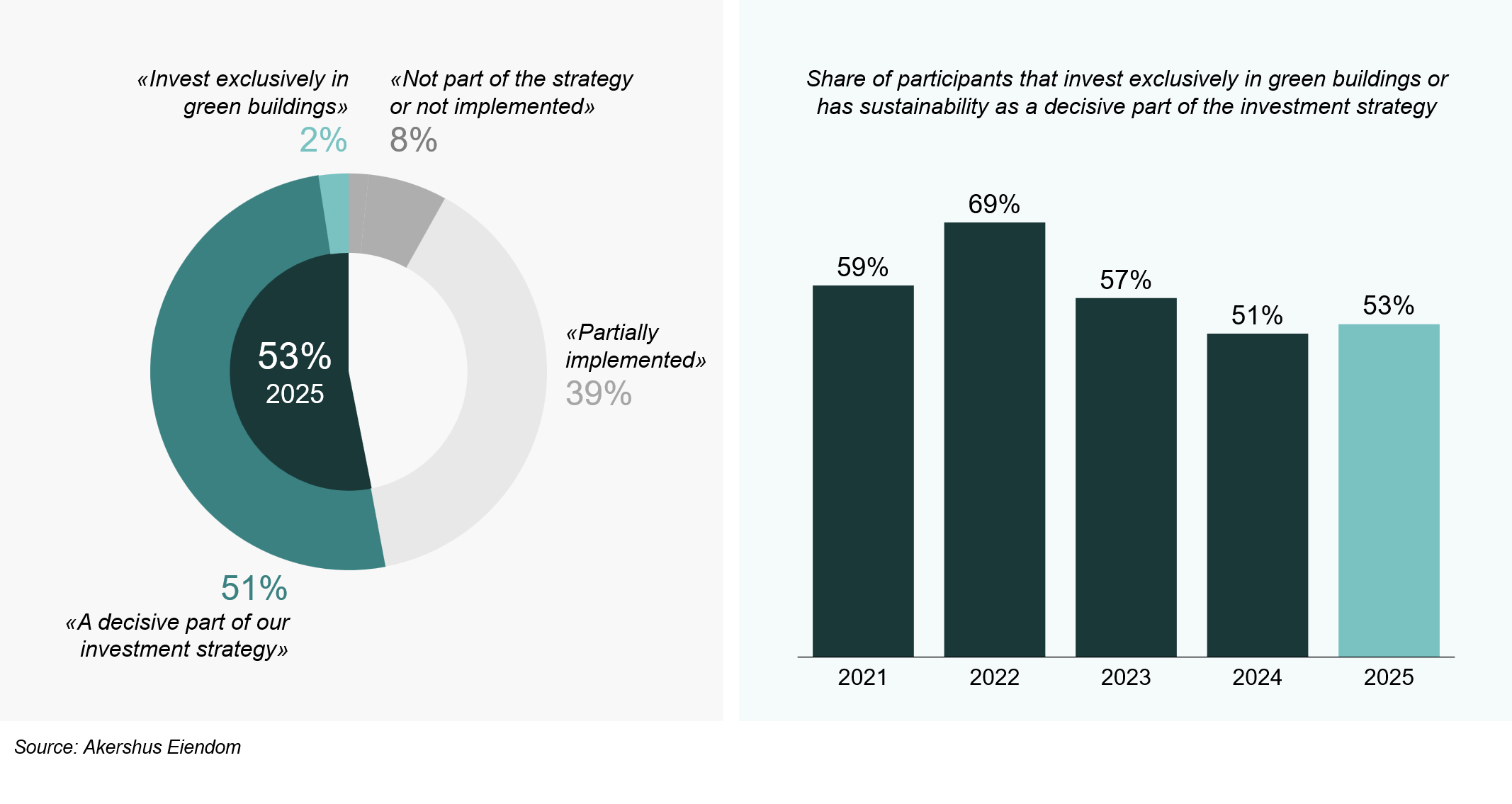
Nevertheless, many still include sustainability in their strategy, and only 8 percent say it is not part of their strategy today. This is reflected in actual transaction processes, where we see strong demand for green buildings, or buildings that can become green in the future, in segments such as office and logistics. This indicates that sustainability remains a central part of decision-making for property owners. However, the motivation behind green investments appears to have changed according to our survey.
Changing Motivation Behind Green Investments
The survey asks why sustainability is part of the investment strategy, to map the underlying motivation. Last year’s survey showed a sharp rise in regulatory requirements and legislations, likely due to the introduction of CSRD (Corporate Sustainability Reporting Directive). Since then, the EU has decided to simplify reporting requirements through the Omnibus package. As described in our June analysis, this affects demand in the leasing market, but not as much as initially expected.
This seems to have influenced property owners’ motivation, and this year’s results show that regulatory requirements and legislations have become a far less important reason to invest in green buildings than last year. In fact, they now appear as the least important factor.
Figure 2: “If sustainability is part of your investment strategy, what is the reason?”
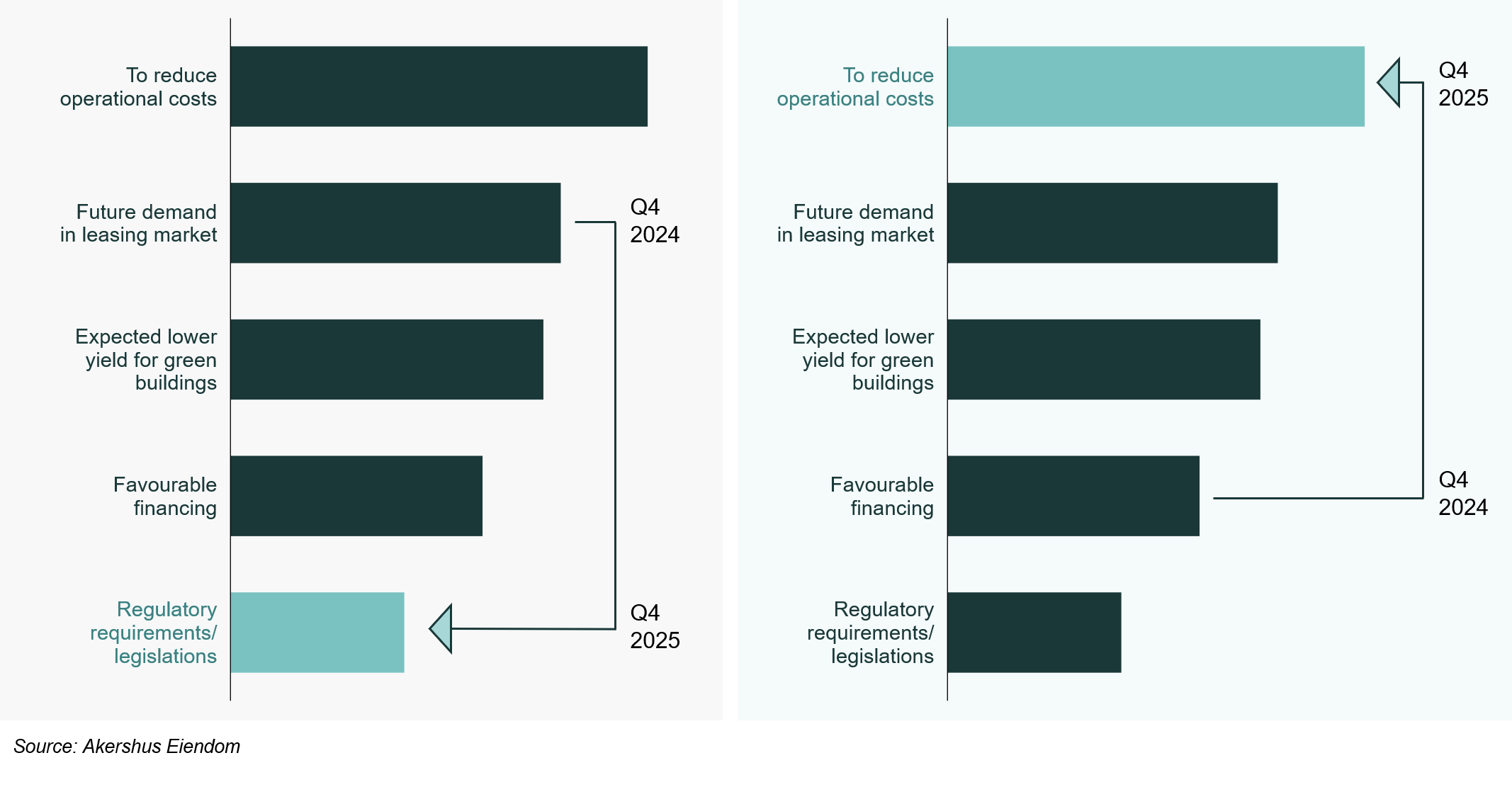
For the first time, the survey shows that reducing operational costs is the clear top motivator, jumping several places in this year’s ranking. This aligns with the overall impression in the property market, where cost control has gained increased focus in recent years among both owners and tenants. This trend is also observed globally. According to a recent JLL analysis, reducing operational costs is the top priority for real estate companies today.
Future demand in the leasing market, which has consistently been the most important motivator until now, has declined somewhat and is now the second most important factor alongside expectations of lower yield.
Future Demand Still Important
This corresponds with a clear decline in owners who believe that tenants place greater emphasis on sustainability now compared to a year ago.
Figure 3: “Tenants place more emphasis on sustainability when leasing new space now than one year ago.”
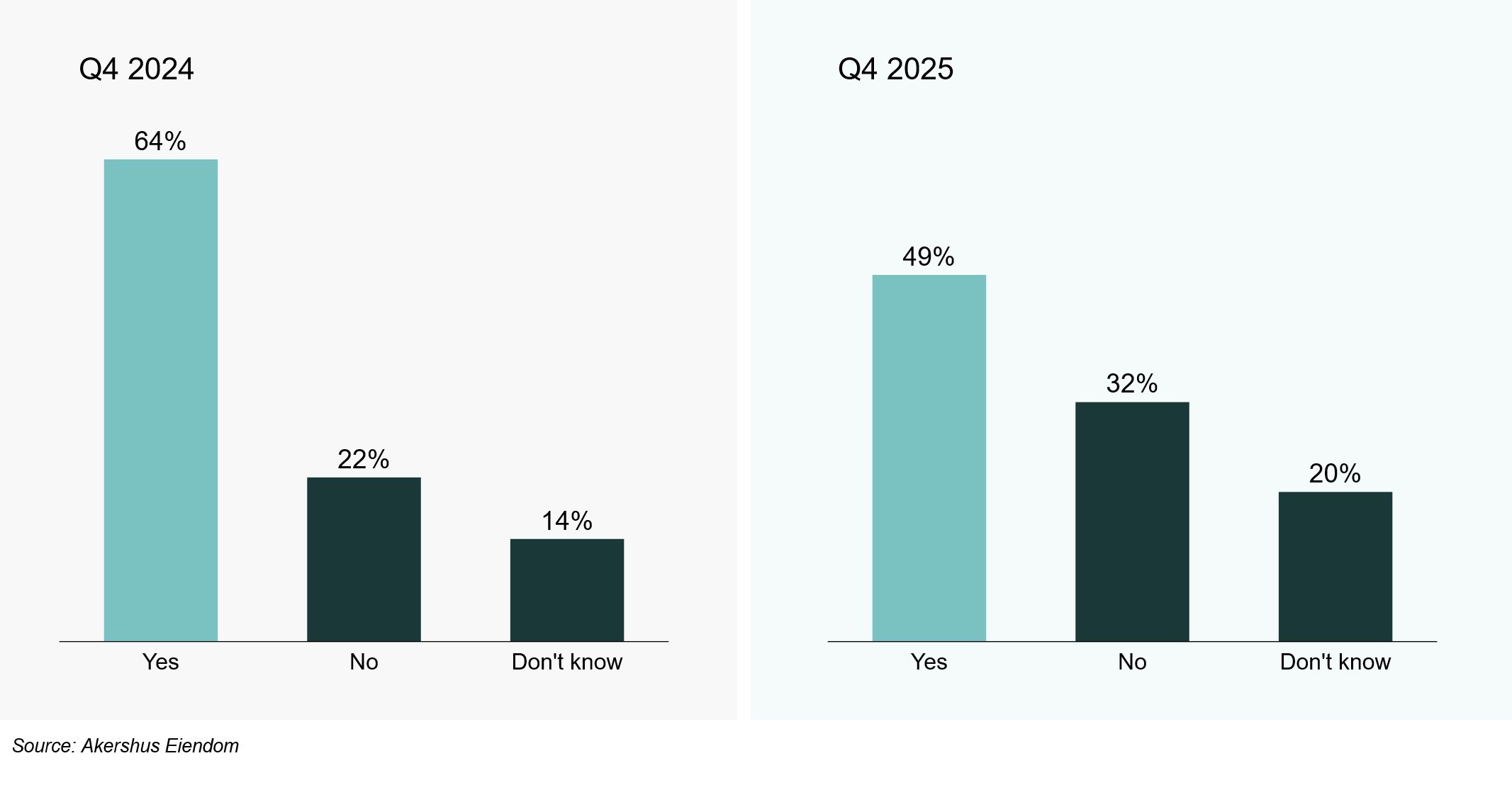
This may be explained by the perception that tenants have already reached their sustainability goals, leaving less obvious upside than before. It may also reflect expectations that CSRD relief will eventually impact the leasing market, even though this has not yet occurred.
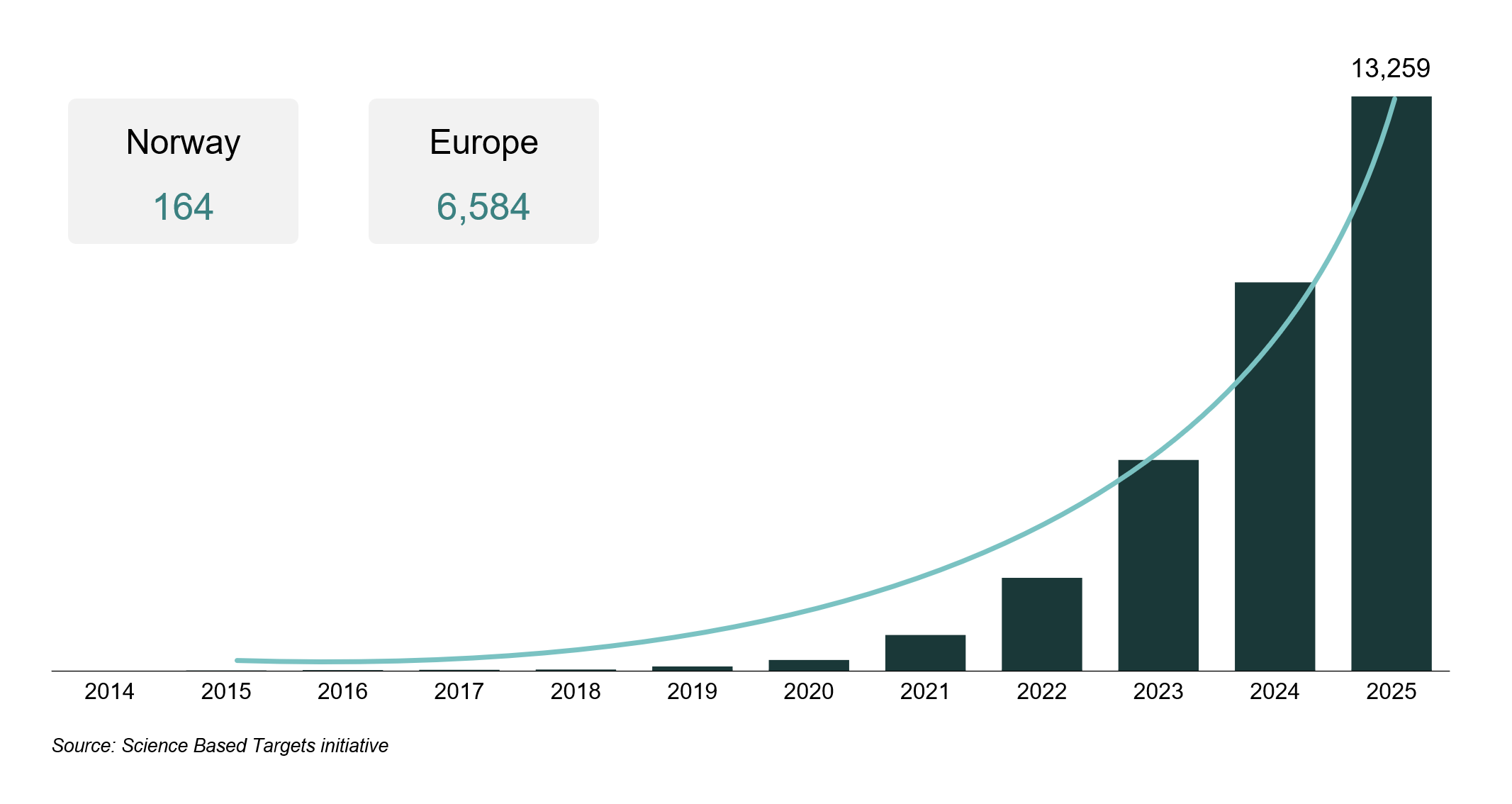
Meanwhile, we see continued growth in companies voluntarily committing to climate targets, including through programs such as the Science Based Targets Initiative (SBTi). Globally, over 13,250 companies have now committed to climate goals via SBTi, of which 6,584 are European and 164 are Norwegian, an increase from June. Based on this, we expect demand for green premises to remain strong, even after Omnibus.
Figure 4: Number of companies committing to sustainability targets via SBTi globally, cumulative
According to our observations in the leasing market, companies remain focused on sustainable solutions, and most expect a clear ESG profile when leasing high-quality office space today. Although few owners have lost tenants due to a building’s environmental profile so far, we expect this to become more common going forward.
Conclusion
Environmental and sustainability factors have shifted from being a “nice-to-have” to becoming clear requirements among tenants, investors, and developers. For many, they are now a decisive part of the investment strategy. However, the motivation behind green investments has changed. This year’s sustainability survey finds that reducing operational costs is now the most important reason to invest in green buildings, while regulatory requirements and legislations have become far less significant over the past year. Looking ahead, we expect ESG to remain a key factor in decision-making for leasing or investing in office properties.