

Market Views, Macro | Uncertainty Surrounding Growth and Employment
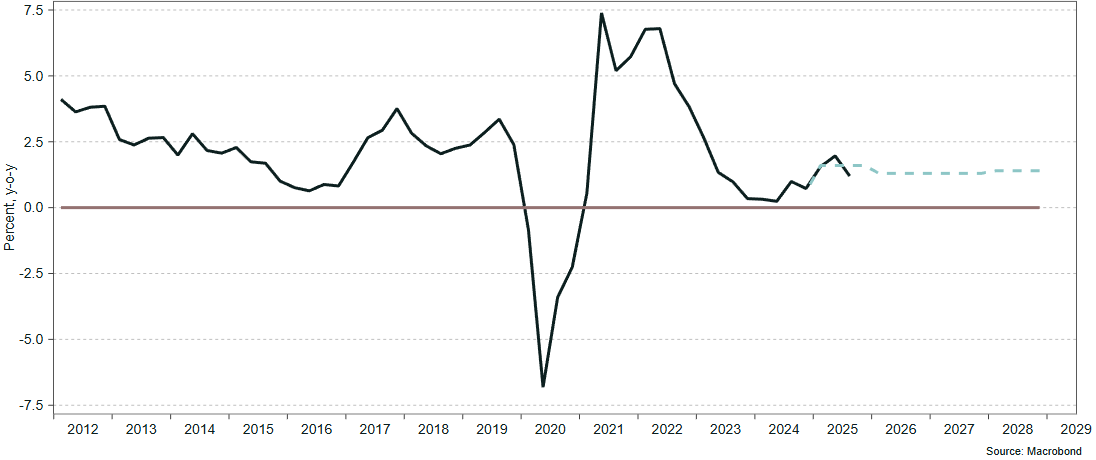
According to Norges Bank, the outlook points to broadly normal economic growth this year, although uncertainty remains around both international trade and activity on the Norwegian continental shelf. In Oslo, the labour market has cooled, and we expect that uncertainty related to the economic outlook and the adoption of AI will keep firms cautious and cost conscious in the near term.
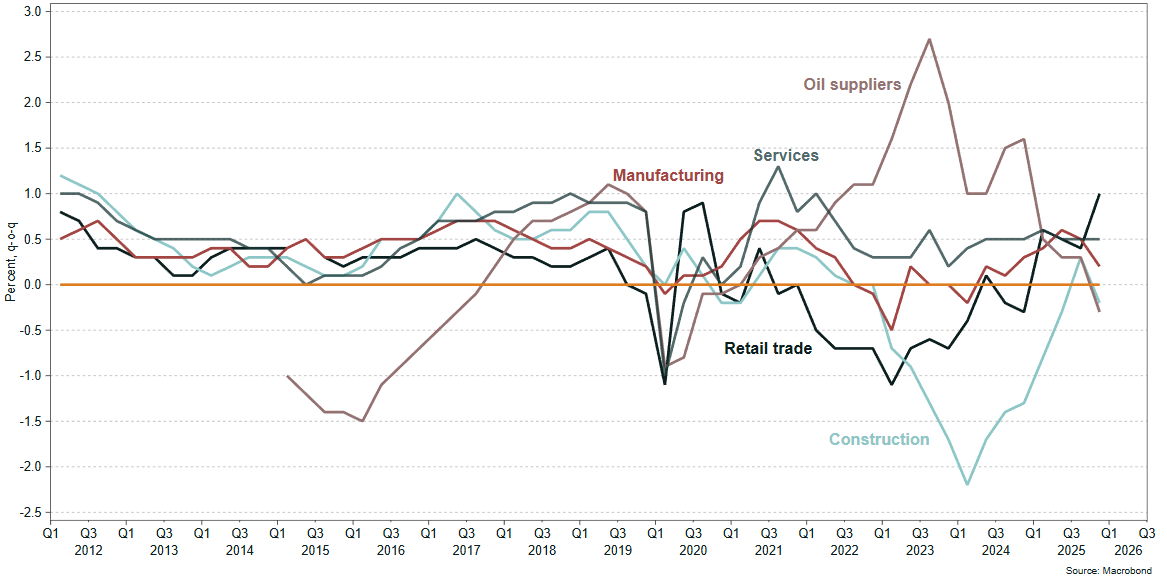
In Norway, GDP growth picked up to more normal rates last year after having slowed markedly in 2023 and 2024. However, sectoral differences within the Norwegian economy remain substantial. The strongest momentum has come from the supplier industry and activities linked to oil and gas. Retail trade has struggled for an extended period but strengthened last year, supported by improved household purchasing power. Construction activity has also recovered somewhat, though it remains relatively subdued.
Figure 1: Output current quarter, Norges Bank Regional Network
Looking ahead, Norges Bank expects economic growth to remain close to current rates, which are considered broadly normal for the Norwegian economy. Nevertheless, there is significant uncertainty tied to the conditions for Norwegian exports and to future activity on the continental shelf.
Figure 2: Norway, GDP growth incl. Norges Bank forecast
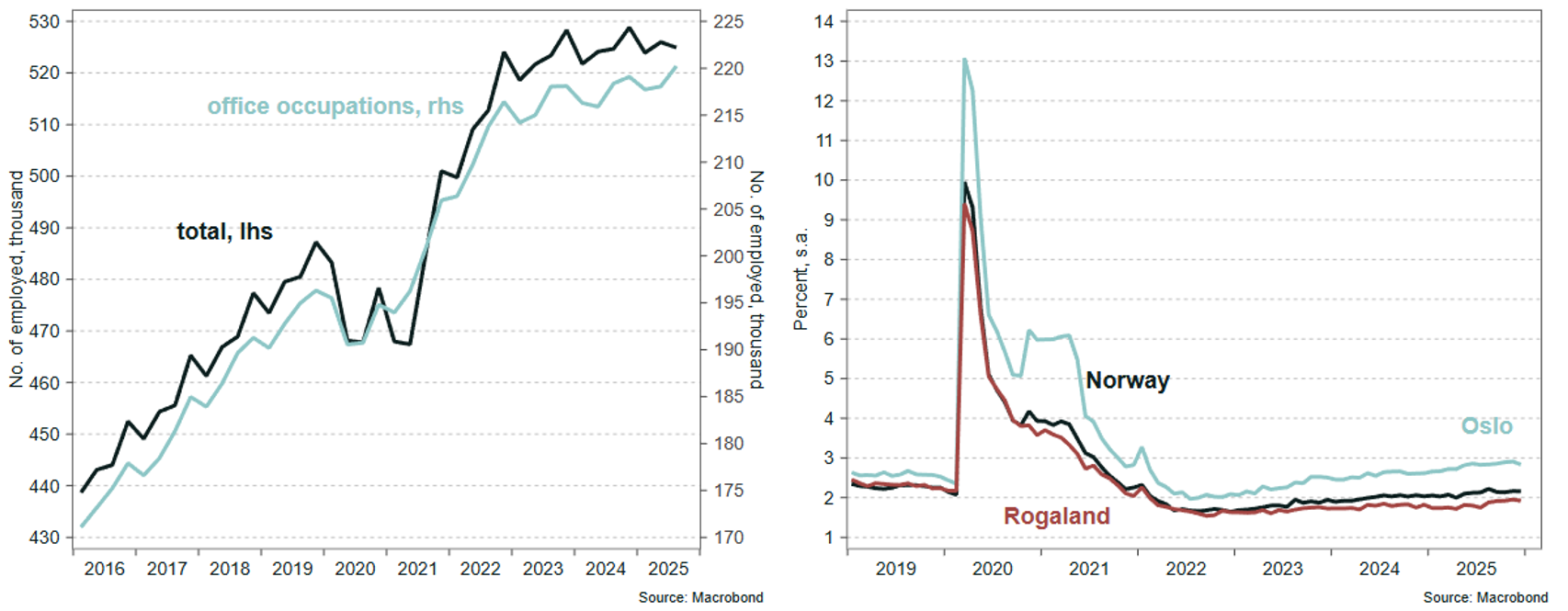
Large disparities between sectors also translate into pronounced regional differences. In Oslo, which has a higher concentration of interest sensitive industries than, for instance, Rogaland, the labour market has weakened in recent years. Since autumn 2023, unemployment has risen and employment growth has levelled off.
Figure 3: Oslo employment, (l.s.), unemployment registred by NAV (r.s.)
In addition to uncertainty around the broader economic outlook, the roll out of AI is contributing to uncertainty among some firms regarding future staffing needs. However, we do not expect the use of AI and new technologies to lead to an overall increase in unemployment, either in Oslo or nationally. The introduction of new technologies may make certain tasks redundant, but at the same time new tasks and roles will be created. This may lead to labour market adjustments, but not a significant rise in aggregate unemployment. Historically, technological change has driven such shifts while simultaneously boosting productivity, supporting higher value creation and employment over time.
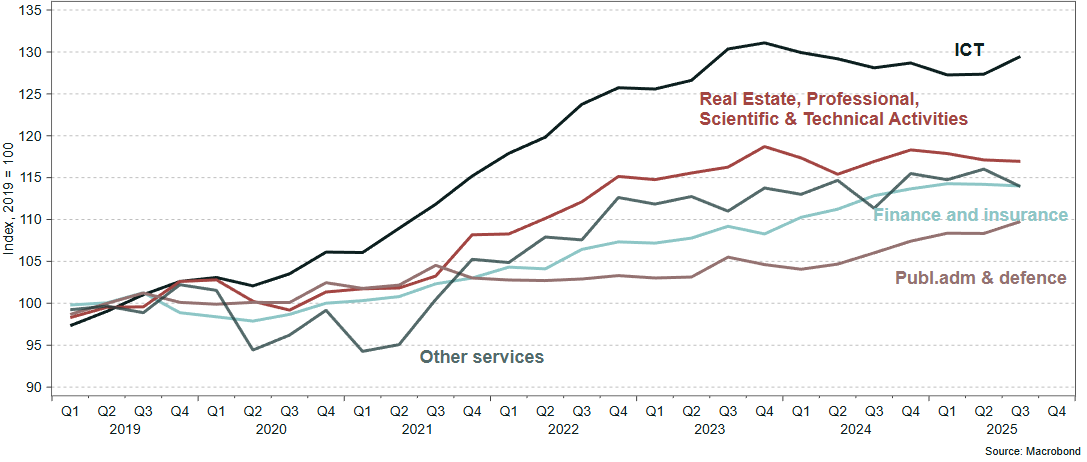
AI and related technologies are also unlikely to reduce overall employment within office-based occupations. Individuals who lose an office job are likely to find a similar role elsewhere. In the Oslo market, we currently observe weakening employment in several business facing service industries, while employment in the ICT sector is rising again. This appears to be connected to increasing demand for AI related services, including implementation and training.
Figure 4: Oslo: employment office occupations
We therefore do not believe that AI or new technologies in themselves will drive an increase in unemployment. However, firms’ uncertainty around these developments—on top of uncertainty linked to both the Norwegian and global economy—is likely to keep companies cautious and focused on cost control in the period ahead.